
After 15 years as an endocrinologist, I've treated hundreds of women with hirsutism.
And I'll be honest with you: the current treatment options frustrate me as much as they frustrate you.
I've prescribed spironolactone hundreds of times. I've referred patients to laser clinics. I've watched women spend thousands on electrolysis. I've seen the hope in their eyes at the first appointment, and the disappointment when they come back 6 months later with the same problem.
Here's what I've learned: we've been treating the symptom, not the source.
If you have hirsutism, you already know what androgens are. You've probably had your testosterone levels checked. You understand why your body produces thick, dark, coarse hair in places women aren't "supposed" to have it.
What you might not know is why everything you've tried only works temporarily.
Let me explain what's actually happening, and what's finally changing for my patients:

Every treatment I prescribe, every procedure I refer to, focuses on one thing: removing hair or blocking hormones systemically.
But here's what I rarely have time to explain in a 15-minute appointment:
Your follicles have already been "activated" by androgens. They've been transformed from producing fine vellus hair to producing thick terminal hair. Blocking androgens with medication can prevent NEW follicles from activating. But the follicles that are already producing coarse hair? They're going to keep producing it.
That's why spironolactone takes 6-12 months to show results. It's not making existing hair finer. It's just preventing the problem from getting worse while you wait for hair to naturally cycle out.
The real solution? Weaken the follicle itself. Make it produce progressively finer hair each cycle until it's barely visible.
That's what I started recommending to my patients. And it's changing outcomes.

Let me give you the clinical reality of what you've probably already tried:
Laser hair removal: Studies show 67-90% reduction. What they don't emphasize is that hormonal hair has a high recurrence rate. In my hirsutism patients, I see significant regrowth within 6-12 months because androgens continue activating dormant follicles.
Electrolysis: The only FDA-approved "permanent" hair removal. But it requires treating each follicle individually. For moderate hirsutism, that's hundreds of hours of treatment. My patients typically spend $8,000-15,000 over 2-3 years.
Spironolactone: I prescribe this daily. It works for about 50-75% of patients. But it takes 6-12 months, requires regular blood tests for potassium levels, causes side effects in most women, and the moment you stop taking it, the hair returns.
Eflornithine (Vaniqa): Slows growth but doesn't remove hair. $69/month. Indefinitely. Stop using it, and you're back to baseline within 8 weeks.
Birth control pills: Can help mild cases. But for clinical hirsutism? Rarely sufficient as monotherapy.
None of these options target the follicle's ability to produce coarse hair. They either remove what's there or try to control hormones systemically.

This is what I tell every hirsutism patient: this is a chronic condition. We're managing it, not curing it.
And I watch their faces fall every time.
Because "management" means:
Taking spironolactone indefinitely. And dealing with the side effects.
Laser maintenance sessions every 3-6 months. Forever.
Electrolysis for years.
Daily or weekly hair removal routines.
As a physician, I'm supposed to accept this. These are the evidence-based treatments. This is the standard of care.
But as someone who actually listens to my patients, I know this isn't good enough.
They don't want to manage hirsutism for the rest of their lives. They want progress. They want to see the hair get finer, softer, less visible over time. They want to eventually not think about it every single day.

Two years ago, a colleague introduced me to research on Cyperus Rotundus, a plant native to the Nile River region.
I was skeptical. I'm trained in evidence-based medicine. "Ancient Egyptian remedy" sounds like marketing nonsense.
But the mechanism of action intrigued me.
Cyperus Rotundus contains compounds that inhibit the enzymes hair follicles need to produce thick, coarse hair. Specifically, it affects the follicle directly, not systemically.
This is different from spironolactone, which blocks androgen receptors throughout your entire body. That's why it causes side effects everywhere.
This is different from laser, which destroys the follicle completely but can't prevent new ones from activating.
Cyperus Rotundus works topically. On the follicle itself. Weakening its ability to produce coarse hair cycle after cycle.
I started recommending it to patients who had tried everything else. Women who were frustrated with spironolactone side effects. Women who had spent thousands on laser with temporary results. Women who couldn't afford years of electrolysis.
The results have changed how I think about treating hirsutism.

In medical school, we're taught to treat conditions clinically. Measure hormone levels. Prescribe medications. Refer for procedures.
What we're not taught is how to address what hirsutism actually does to women.
The 75% who report clinical anxiety about their appearance. The daily routines that take 30+ minutes. The relationships affected. The confidence destroyed. The feeling of being trapped in a body that doesn't match who they are.
I can normalize lab values. But I can't prescribe confidence.
What I can do is recommend something that actually shows progressive improvement. Where each cycle, the hair is a little finer. A little softer. A little less visible.
Where one day, my patients come back and tell me they haven't thought about their chin in weeks.
That's what 100,000+ women are experiencing now. Not "management." Progress.
The Ancient Secret Available Today
After years of research, we've recreated the exact botanical formula Egyptian women used for hormonal hair. Enhanced with modern safety standards and designed specifically for women with hirsutism.

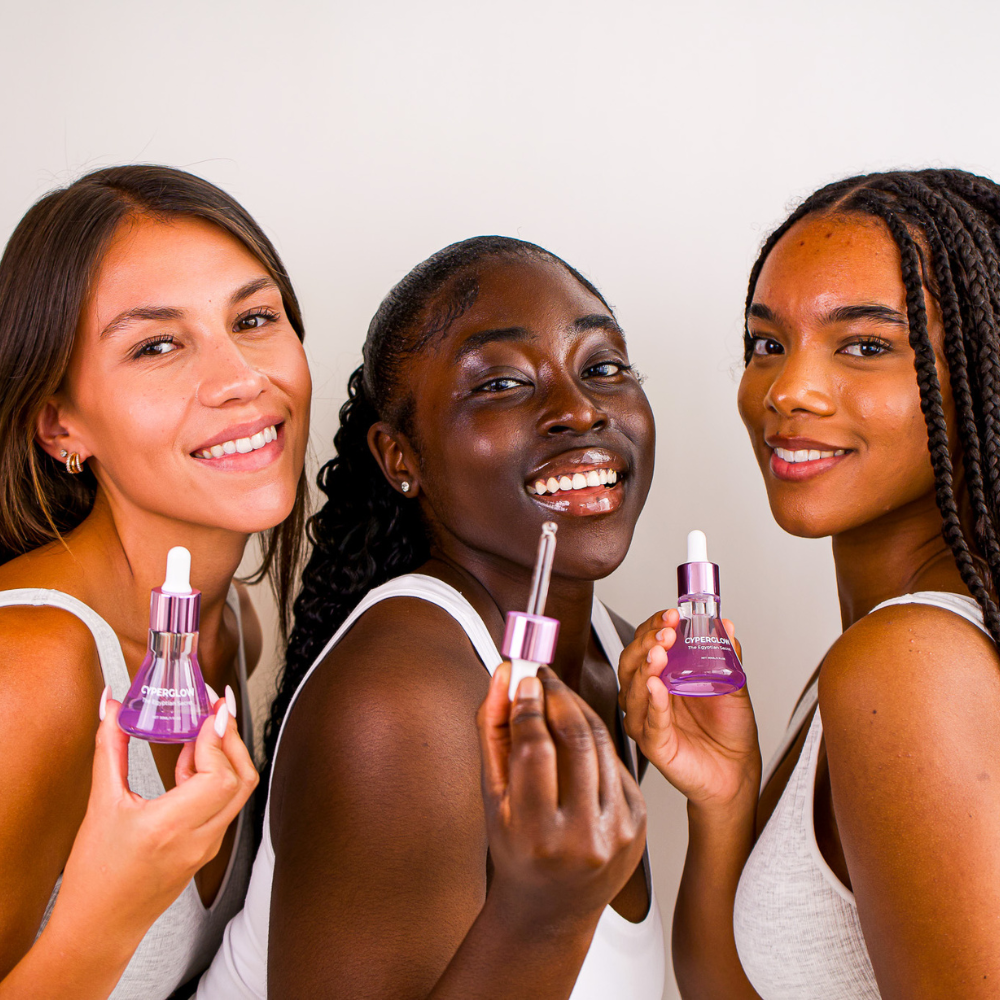
CyperGlow's Cyperus Rotundus Skin Serum contains the same hair-growth inhibiting Cyperus Rotundus root extract, combined with soothing peppermint, brightening lemon extract, healing vitamin E, and nourishing olive oil.
Directly sourced from verified Egyptian suppliers and test every batch, which is why it actually works, but also why they can only secure limited supply.

Designed For Hirsutism
Endocrinologist Approved
100,000+ Women Trust Us
365-Day Money-Back Guarantee


Lisa V.
I still don't understand how this works. I was struggling with really thick hairs on my upper lip and cheek area for YEARS, and this serum completely got rid of it!!

Nicky S.
Been using it for just 1 week and I'm not seeing near as many hairs on my chin

Gloria E.
I'm not even lying when I say I've put my whole family on this🤣😭 My cousins, sisters and mom can't stop thanking me

Cindy C.
My husband noticed after like 2 weeks that my stubble disappeared above my lips.. Very helpful product. 😚
How Do I Use It?
+
Easily incorporate into your hair removal routine by:
- Remove unwanted hair using your preferred method (shaving, waxing, epilating)
- Apply 3-5 drops of serum to clean, dry skin
- Massage gently until fully absorbed
- Reapply twice daily for optimal results
Enjoy smoother skin for longer.
How Long Until I See Results?
+
Most users notice slower and finer regrowth within 1-2 weeks of consistent use. With consistent long-term use, many customers report dramatic reduction in hair growth that lasts even with less frequent applications. Results improve over time with regular use.
Where Can I Apply It?
+
Our Cyperus Rotundus Skin Serum can be safely used on most body areas including face, underarms, bikini line, legs, and arms. For facial use, avoid the eye area.
Does This Affect My Hormones Or Testosterone Levels?
+
Not at all, and we totally understand why you're asking! This is such an important question, especially with all the hormone-disrupting products out there.
Our Cyperus Rotundus Skin Serum works completely differently from harsh chemicals. Instead of messing with your hormones, it works gently at the skin level through natural botanical compounds. Think of it like how certain plants naturally affect hair growth - it's working with your skin, not against your body's hormone balance.
The beautiful thing is that women have been using Cyperus Rotundus for thousands of years without any hormonal side effects. Our formula contains extra natural plant extracts like peppermint, lemon, vitamin E, and olive oil - nothing synthetic that would interfere with your delicate hormone system.
Unlike treatments that affect your entire body, this stays right where you apply it. You can use it confidently throughout your cycle, during pregnancy planning, or any other time without worrying about throwing your hormones off balance.
Your body's natural rhythm stays completely undisturbed while you enjoy smoother, more comfortable skin!
Is This Safe for Pregnant Women?
+
Absolutely! Many pregnant women experience increased hair growth due to hormonal changes, and our natural botanical formula is gentle enough for expecting mothers. Unlike harsh chemical treatments or laser procedures that aren't recommended during pregnancy, Cyperus Rotundus has been safely used by women for thousands of years. However, as with any new product during pregnancy, we always recommend consulting with your healthcare provider first.
Does This Work for PCOS-Related Hair Growth?
+
Yes! Many women with PCOS have found incredible success with our serum. 73.8% of our customers have diagnosed PCOS, and they often see the most dramatic results because hormonal hair tends to be more stubborn - meaning there's more room for improvement. The natural compounds in Cyperus Rotundus work regardless of what's causing your hair growth, whether it's PCOS, hormonal changes, or genetics. Since it works at the follicle level rather than interfering with your hormones, it's a safe complement to any PCOS management routine.
Went from plucking my upper lip every 3 days to every 3 weeks, the hairs have gotten so much lighter already